

Wind Is the Invisible Hazard: How It Changes Golf Ball Flight
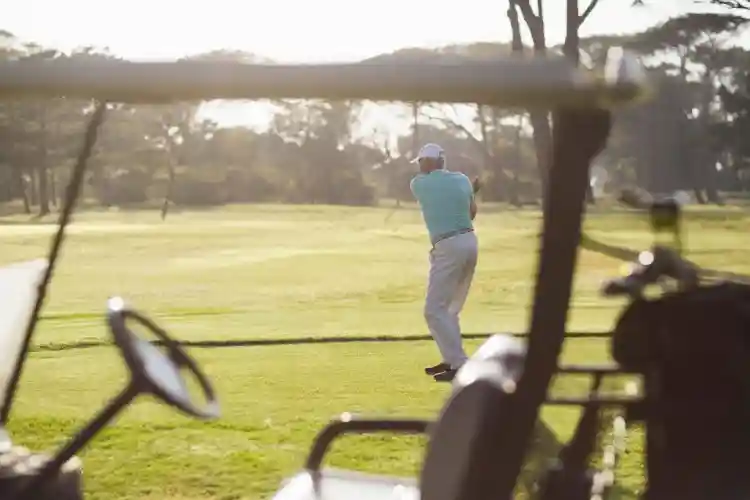
Wind can influence every golf shot, even though it has no bunker edge, boundary line, or visible marker. A swing that normally sends the shot towards the center of the green can fall short due to wind. It may finish short, drift sideways, or even travel farther than expected.
Thus, wind can be seen as a fascinating variable that every golfer must learn to manage. It’s not as simple as adding or subtracting distance. Wind has a strong influence on trajectory, curvature, landing angle, carry, and even what happens after the ball reaches the ground.
A golfer can easily make smarter club and target decisions throughout a round, if they understand how wind affects everything.
Why Wind Has Such a Strong Effect
A golf ball begins interacting with the surrounding air, once it leaves the clubface. The ball is influenced by the aerodynamic forces acting on it, until it lands. Besides, its speed, launch angle, spin, and direction determines the initial flight.
The movement of air relative to the ball changes due to wind, which tends to alter the resulting flight. The longer the ball remains airborne, the more opportunity the wind has to affect it.
This the sole reason why at times, high shots can sometimes appear dramatically influenced by strong conditions. A lower shot behaves differently, as it spends lesser time exposed to moving air.
If you want to play intelligently in windy conditions, you must understand this relationship since the very start.
Headwinds Do More Than Reduce Distance
Players naturally expect the ball to travel a shorter distance, when the wind blows towards the golfer. However, the effect is more complicated than simply subtracting a few yards. The airflow experienced by the ball changes with a headwind.
This can increase the aerodynamic forces acting on it. The shot may climb higher than expected and lose a considerable forward distance, depending on the launch and spin conditions.
An important strategic lesson is created here. If you’re trying to overpower the headwind by swinging significantly harder, it can have the opposite impact. The intended result will be opposite.
Sometimes spin increases and the launch characteristics that make the ball climb further into the wind also increases when you swing harder. Thus, a more predictable solution is offered by controlled contact and appropriate club selection.
Tailwinds Change Carry and Landing
When the wind is blowing towards the target, the ball generally travels farther. However, additional distance is only one part of the whole story. The ball’s trajectory and descent is also impacted by the tailwind.
The ball may experience less relative airflow and descent with a different landing angle than expected, depending on your shot. Particularly in firm surfaces, the ball may release farther, once it reaches the ground.
When approaching the green, this matters enormously. Under helping conditions, a shot that normally lands and halts relatively quickly may bounce forward. Thus, there’s a need for the golfers to think about both where the ball lands and where it could finish.
At times, the correct target is several yards short of the flag, as the wind and the ground will complete the journey.
Crosswinds Create Directional Problems
A different challenge is introduced by crosswinds. They don’t primarily influence distance, rather they push the ball sideways, as they travel. There are several factors that influence the amount of movement, including wind strength, trajectory, spin, ball speed, and time in the air as well.
Before landing, a high approach shot can experience significant sideways movement. Thus, aiming becomes particularly important. You don’t need to fight the wind in every shot, rather allow it to move the ball towards the target.
For instance, you can create some natural room for a drift, when you aim slightly at the wind. However, what surrounds the landing area determines the safest target. If a strong crosswind is pushing toward a hazard, providing additional margin is essential.
Wind Can Magnify Curvature
How the wind interacts with an already curving golf shot is one of the more difficult aspects of playing in the wind. Imagine the ball is beginning to curve towards the same direction the wind is blowing. Greater sideways movement is facilitated by the wind, which turns the manageable curve into a much larger miss.
The opposite situation may also occur. The visible sideways movement may be reduced by the wind blowing against the ball’s curvature. Or it may also produce a different flight than expected.
This is the main reason why golfers must consider both their normal shot shape and the wind direction as well, before they select any target at all. If you’re ignoring either factor, it can leave half the equation unsolved.
High Shots Give the Wind More Opportunity
How long and where the ball interacts with the wind depends on the trajectory of the ball. You’ll find out that higher shots tend to remain airborne for longer periods. They also travel through different layers of moving air.
Thus, wind gets more time to influence direction and distance. Sometimes, you may get additional predictability with lower trajectories, as the ball spends less time exposed. This doesn’t mean that golfers need to attempt low shots, whenever conditions become windy.
Instead, another strategic variable to consider is the trajectory. You may be able to manage uncertainty by reducing height, if the situation allows controlled lower flights. However, in case an obstacle requires a higher shot, the golfer must account for the additional influence of the wind.
Wind Is Not Always Constant
Wind can change from moment to moment, which makes it difficult to judge. Even if a golfer is feeling one direction at the ground level, the conditions above surrounding trees may behave differently.
Matters are further complicated by the terrain. Airflow can be redirected by trees, slopes, buildings, and other features, or it can temporarily shelter sections of a hole. Another problem is introduced by gusts.
A club selected during calm conditions might suddenly become inappropriate when a stronger gust arrives during preparation. This variability means golfers should gather information from several sources rather than relying entirely on what they feel standing beside the ball.
Look Beyond the Tee
What the wind is doing can be revealed by several visual clues that are available. You may watch the trees, grass, flags, or other vegetation around the target area. Sometimes broader information may be provided regarding atmospheric movement by clouds. However, conditions near the ground may vary.
The main aim must be to observe conditions across the entire path of the shot that you’re taking. A tee box may be sheltered, while the fairway is exposed. A green may sit above surrounding terrain and experience stronger wind than the position from which the approach is played.
You must consider where the ball will travel, not just where you’re standing.
Club Selection Becomes More Important
Golfers are often forced to rethink normal club choices due to wind. Additional club may be required into a headwind. Less club might provide the necessary distance, with a helping wind.
But club selection should also consider trajectory. Taking more club and making a controlled swing can sometimes produce a more manageable flight than attempting to hit a shorter club very hard.
The objective is predictable contact and useful trajectory rather than maximum effort. Distance estimates should also include a margin for uncertainty because wind strength can change during the shot.
Do Not Forget the Ground
Wind continues influencing strategy after the ball has landed indirectly through the type of flight it creates. A lower shot may land at a shallower angle and roll farther. A shot assisted by a tailwind may also release more than expected.
Course conditions then become part of the calculation. Firm ground increases the importance of bounce and roll. Softer ground can reduce them. This means the ideal landing point can change significantly even when the target itself stays exactly the same. Golfers who plan only for carry distance are solving just part of the problem.
Avoid Fighting Every Gust
Wind can tempt golfers into trying unusual shots that they rarely practice. That approach can introduce more uncertainty than the wind itself. Often, the simpler response is adjusting club selection, target, trajectory, and expectations while making a familiar swing.
Accept that some shots will travel differently from normal. Trying to force the ball to behave exactly as it does in calm conditions can encourage excessive effort and poor decisions. Playing in wind is partly about accepting variation.
Consider Wind as Part of the Hole
The smartest way to think about wind is not as an interruption but as another feature of the course. A bunker influences where you aim. A slope affects where the ball finishes. Wind deserves the same strategic attention.
Before each shot, determine its general direction and strength. Consider your normal ball flight, expected trajectory, carry distance, hazards, and landing conditions. Then select a target with enough room for reasonable variation. Wind will never become completely predictable, and that is part of its challenge.
Yet golfers who understand how moving air influences trajectory, curvature, carry, landing, and roll can make better decisions even when conditions become difficult. The hazard may be invisible, but its effects are written across every ball flight. Learning to read them turns wind from a source of confusion into another piece of the strategic puzzle.